10h09.com

Chronographs: A Buyer's Guide to the Stopwatch Complication

A chronograph is a stopwatch you never take off — sub-dials and pushers borrowed from motorsport and put to work on your wrist.

References25+
Brands7
Entry price~$302
Water resistance50m – 100m
10h09 pickTAG HEUER Carrera Calibre 5

The case for a chronograph

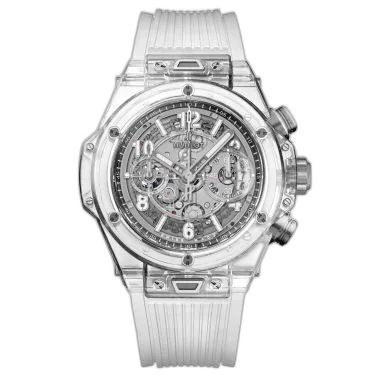
A chronograph adds one or more sub-dials and pushers to independently time an event, separate from the main timekeeping — cases run larger, typically 40–45mm, to accommodate the extra mechanism, and the best examples keep that added information legible through contrast and hierarchy rather than cramming more onto the dial. It's a genuinely useful daily-wear category, timing anything from a parking meter to a workout, not just a design flourish.

Movement type changes the ownership experience more here than almost any other category — quartz chronographs are accurate and low-maintenance, while automatic column-wheel movements command real respect but cost more. Omega's Speedmaster carries the category's most famous credential, TAG Heuer built an entire identity around motorsport chronographs, and Tissot and Seiko bring genuine chronograph function to a far more accessible price point.

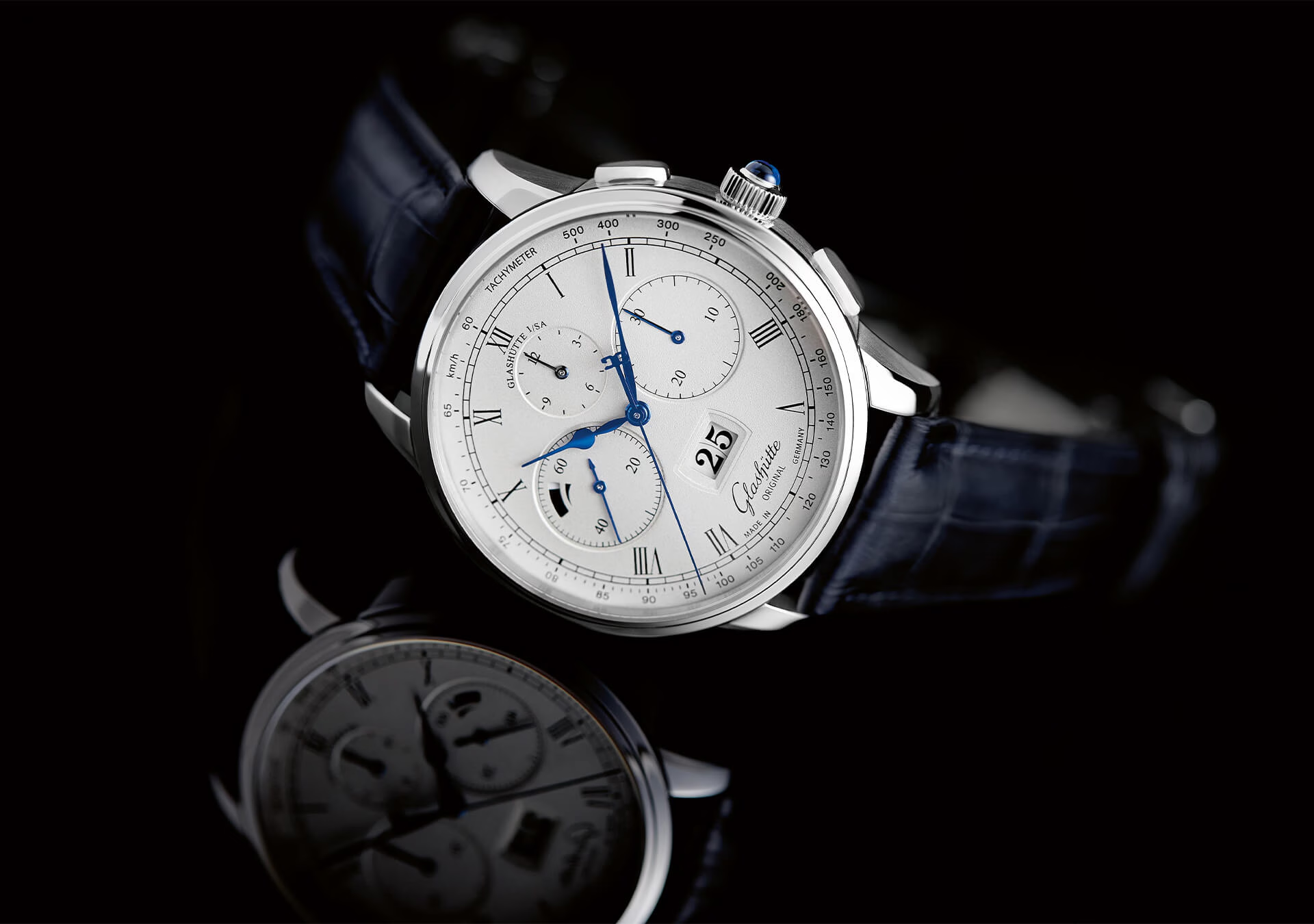
TachymeterA scale on the bezel or dial that converts elapsed seconds into speed — start the chrono over a known distance and read the result directly off the scale.
Sub-dialA small secondary dial tracking elapsed minutes, hours, or running seconds. Most chronographs carry two or three; how legibly they're arranged separates a good dial from a cluttered one.
Column-wheelA traditional chronograph-control mechanism prized for its crisp, precise pusher feel. Costlier to produce than a cam-switching lever, and mostly found in higher-tier movements.
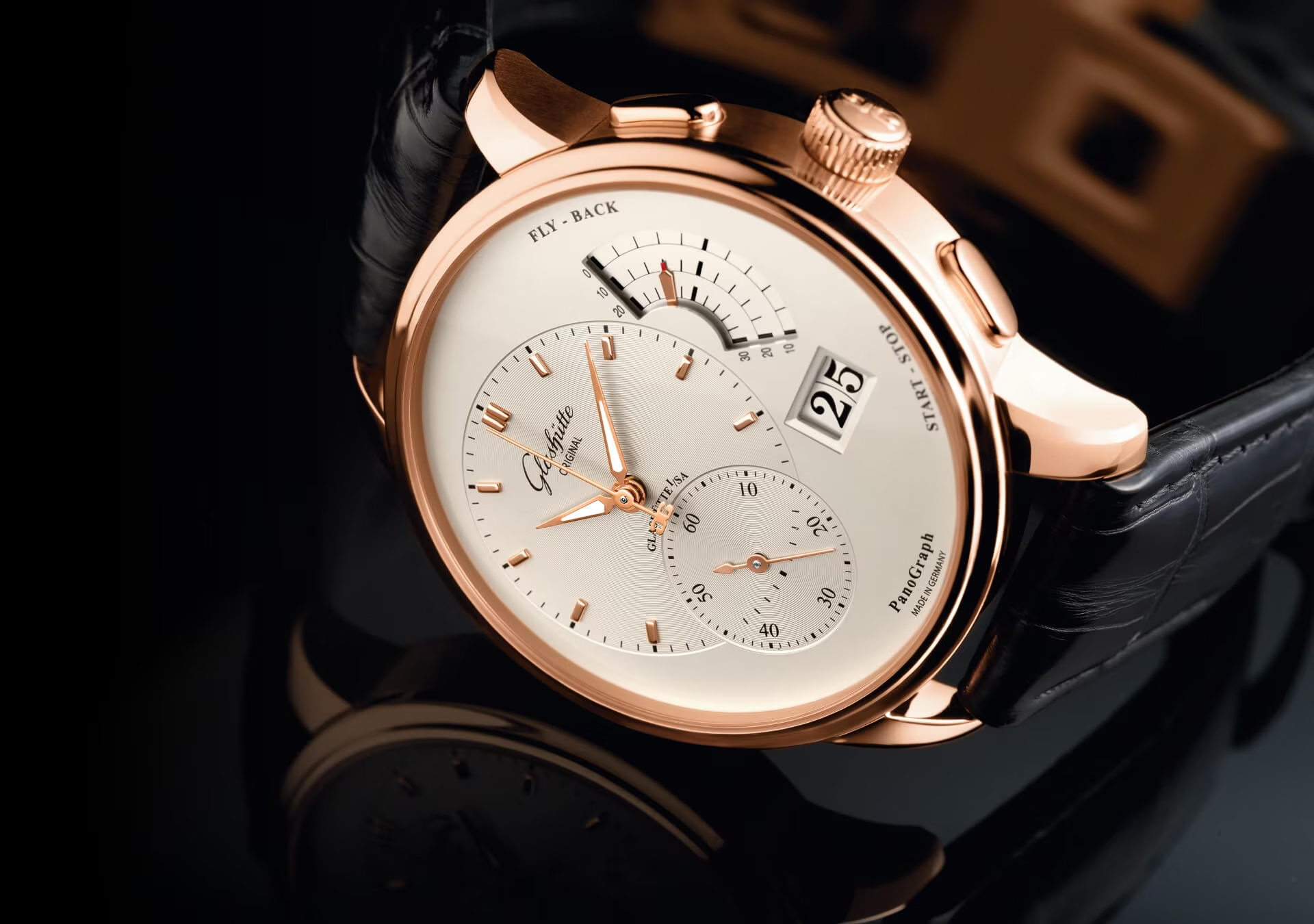
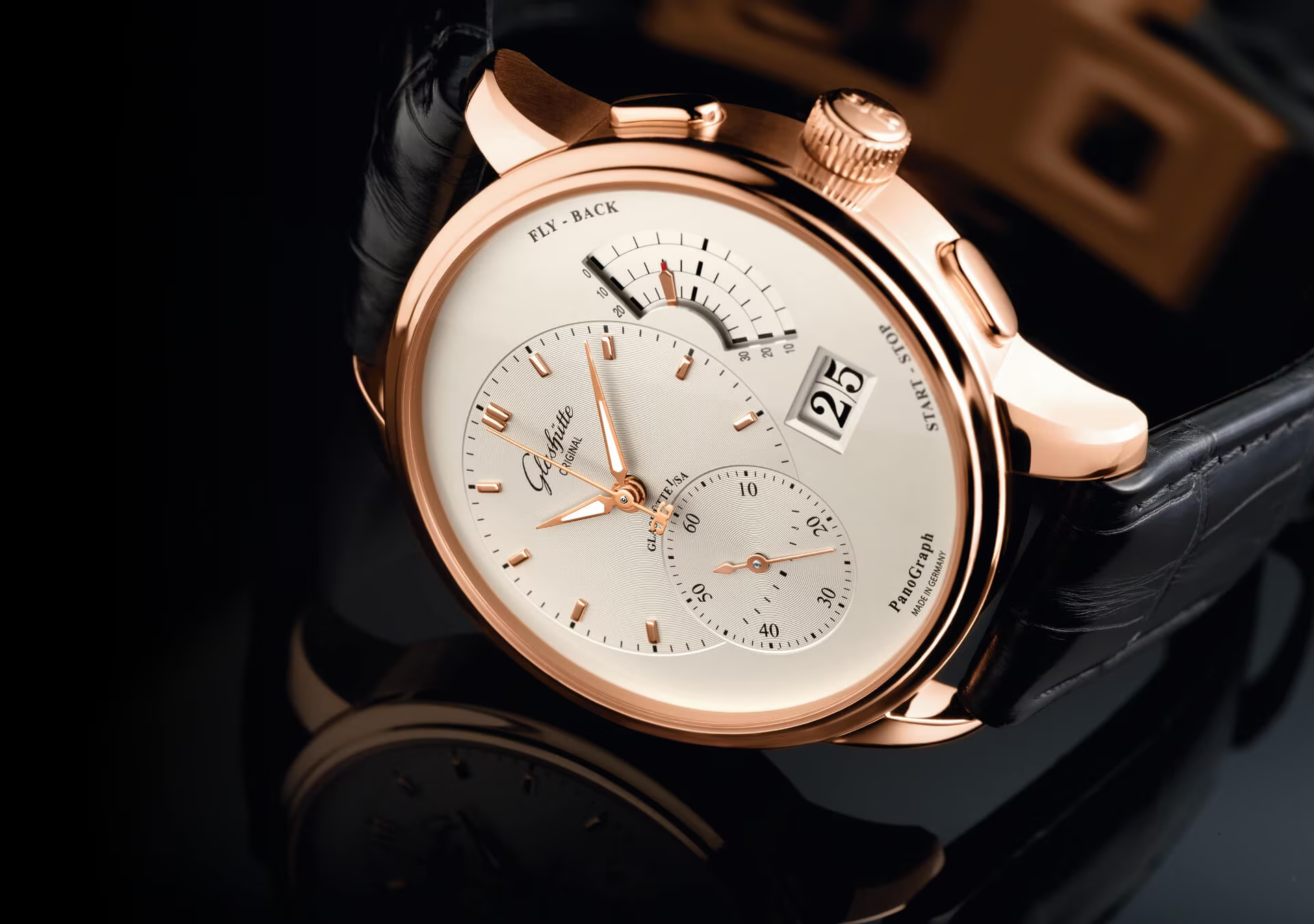
FlybackA complication that lets the chronograph reset to zero and restart instantly with a single pusher press, without first stopping it. Born from aviation, where every second between timings counts.
10h09 picks — three budgets
Seiko Sport
Entry · under $500
Seiko
Sport
SSB347P1 · 43.9mm · 100m

A mecaquartz Cal. 8T63 movement gives this 43.9mm chronograph a mechanical-feeling pusher action most quartz chronographs can't match, at a genuinely accessible price.

TAG HEUER Carrera Calibre 5
Mid · $3,500–$4,000
TAG HEUER
Carrera Calibre 5
WBN2110BA0639 · 39mm · 100m

Named after the Carrera Panamericana road race, this 39mm automatic carries the motorsport lineage that defines the category, sized to wear well beyond the track.

~$3,996View
OMEGA Speedmaster Moonwatch Professional Chronographe
Investment · $7,500+
OMEGA
Speedmaster Moonwatch Professional Chronographe
31032425001001 · 42mm · 50m

The exact reference NASA qualified for spaceflight and Apollo 11 wore to the moon — a hand-wound Cal. 3861 chronograph with a claim to history no other watch on this list can make.

~$7,884View
The 10h09 take

Why a chronograph is the complication worth owning.

A complication you'll actually use
Timing a parking meter, a phone call, or a pot of pasta doesn't need a moonphase — it needs a chronograph. It's the rare complication that earns its place daily.
Racing and space heritage
From the Carrera Panamericana to Apollo 11, no other complication carries as much documented history. Every sub-dial has a reason to exist.
The dial that rewards a closer look
Tachymeters, sub-dials, pushers — a good chronograph has more going on than almost any other watch, and it's all functional, not decorative.

Common questions

What is a chronograph watch?
A chronograph is a watch with a built-in stopwatch function — usually one or two pushers beside the crown start, stop, and reset independent timing, tracked on sub-dials separate from the main time display.
Is a chronograph harder to read than a normal watch?
It can be, since it carries more sub-dials and often a tachymeter scale — but well-designed chronographs use contrast and hierarchy to keep the main time legible at a glance. Cluttered dials are usually a sign of a lower-tier design, not an inherent chronograph limitation.
Automatic or quartz chronograph — which is better?
Quartz chronographs are more accurate day to day, cheaper, and need no winding, while automatic chronographs (especially column-wheel movements) are prized for mechanical craftsmanship and typically cost more. Neither is objectively better — it depends whether you value precision or mechanical romance.
What is a tachymeter used for?
A tachymeter scale, printed on the bezel or dial edge of many chronographs, calculates speed over a known distance — historically used for timing laps or measuring speed in cars and aircraft. It's a functional holdover from the category's motorsport and aviation roots.

Not sure which one fits your life? A few questions is all it takes.

Find your watch.

Start the quiz