10h09.com

Integrated-Bracelet Watches: A Buyer's Guide to Watches Built as One Piece

With this type of watch, the bracelet is not a secondary detail — if you only like it on a leather strap, a conventional-lug design will probably suit you better.

References190+
Brands14
Entry price~$427
Case diameter33mm – 42mm
10h09 pickBAUME & MERCIER Riviera

What actually matters on an integrated-bracelet watch

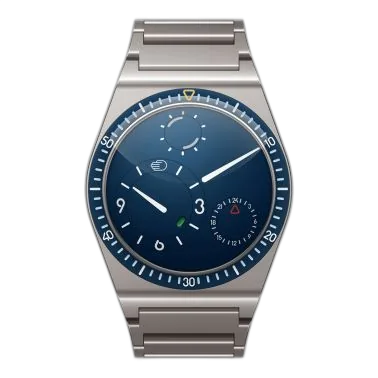
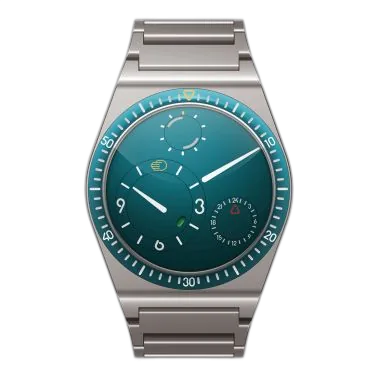
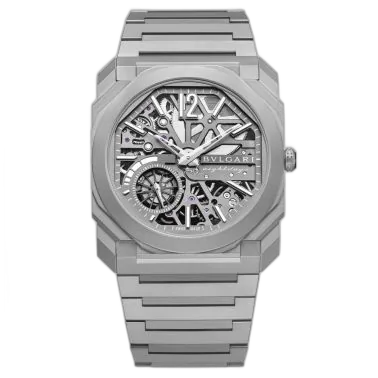
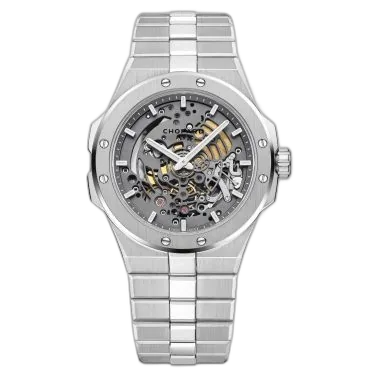
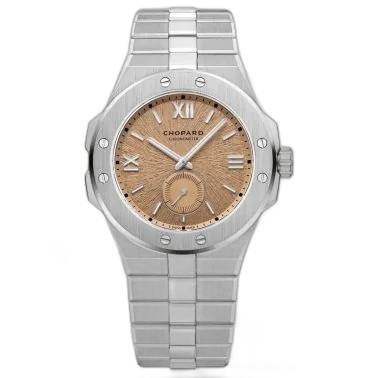
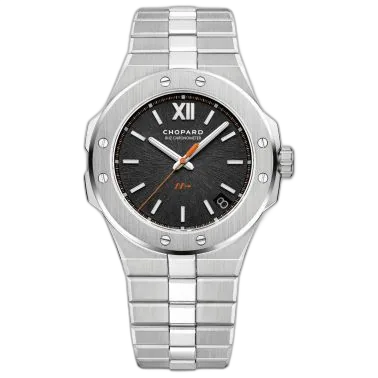
An integrated-bracelet watch is designed as one continuous object. Instead of a conventional bracelet attaching between two visible lugs, the first links flow directly out of the case, making the bracelet central to the watch's shape, stance, and character.

The Royal Oak and the Nautilus popularised this format in the 1970s, and the range below covers everything descended from it: sporty steel designs, slimmer dress-adjacent pieces, angular period-correct models, and everyday watches that wear the style more quietly. Dial colour and case shape vary widely; what doesn't change is the case-to-bracelet joint disappearing entirely.

First-link articulationThe first link is where an integrated-bracelet watch either works or fails on the wrist. If it is long, flat, or rigid, it can create an awkward gap and make the watch wear larger. A well-designed first link folds down quickly and follows the wrist's curve.
Bracelet taperA tapered bracelet usually makes the watch feel more balanced and comfortable, and helps the design look considered rather than like a block of steel. A wide bracelet with little taper can look powerful, but it can overwhelm a smaller wrist.
Case geometryDo not judge an integrated-bracelet watch by case diameter alone. Bracelet width, a broad bezel, flat surfaces, and dial opening can make a 38mm watch wear more prominently than a conventional 40mm model.
Clasp adjustmentA good clasp matters on any bracelet, but particularly here because the bracelet is central to the design. Look for enough removable links and, ideally, a micro-adjustment system — a near-perfect fit matters more on a design that isn't always easy to move onto another strap.
10h09 picks — three budgets
Tissot PRX
Entry integrated steel · ~$427
Tissot
PRX
T1372101103100 · 35mm · 100m

A genuinely coherent case-and-bracelet design at a price that lets you try the format before committing further.

BAUME & MERCIER Riviera
1970s-inspired original · ~$4,428
BAUME & MERCIER
Riviera
M0A10702 · 42mm · 100m

One of the watches that defined the category in period, reissued with a manufacture movement and the angular bezel that made the shape recognisable.

~$4,428View
Oris ProPilot X Calibre 400
Modern titanium sport · ~$4,644
Oris
ProPilot X Calibre 400
01400777871530772001TLC · 39mm · 100m

A titanium case and integrated titanium bracelet with a 5-day power reserve — the format built for daily wear rather than as a vintage homage.

~$4,644View
The 10h09 take

Choose by style, then check the fit on your own wrist

Clean everyday steel
The easiest entry point. Look for a restrained case, simple dial, comfortable bracelet, and enough water resistance for real daily use.
1970s-inspired sport watch
Expect more angular cases, textured dials, wide bezels, and a bracelet that is a defining visual feature. This is the most recognisable integrated-bracelet look, and works best if you enjoy a more assertive design.
Refined and dress-adjacent
A slimmer integrated-bracelet watch can be a strong office companion. Look for controlled thickness, a clean dial, and a bracelet with enough taper to stay elegant rather than bulky.
Compact fit
Integrated bracelets can look and feel substantial because the visual line extends beyond the case. On a smaller wrist, prioritise short, articulating end links, a restrained dial opening, manageable thickness, and a bracelet that curves quickly around the wrist.

Common questions

What is an integrated-bracelet watch?
It is a watch in which the bracelet is designed to flow directly from the case rather than attaching to traditional exposed lugs. The bracelet and case are conceived as a single design.
Why are integrated-bracelet watches so popular?
They have a strong, recognisable silhouette and connect to the luxury-sports-watch designs that emerged in the 1970s. Their renewed popularity also reflects interest in vintage-inspired design and versatile steel sports watches.
Did Audemars Piguet invent the integrated bracelet?
No single brand can claim to have invented every version of a bracelet that visually meets a case. However, Audemars Piguet's Royal Oak, launched in 1972, became the defining and most influential modern luxury-sports-watch interpretation of the integrated-bracelet idea.
Are integrated-bracelet watches good for small wrists?
They can be, but fit needs extra care. Check the first-link length and articulation, bracelet width, case thickness, and the total visual footprint, not only the stated case diameter.
Can I change the strap on an integrated-bracelet watch?
Sometimes. Some brands offer dedicated rubber, leather, or fabric options, while others have a bracelet-specific construction with limited aftermarket compatibility. Check the exact model before buying.
Are integrated-bracelet watches only for sport?
No. Although the category is rooted in luxury sports watches, integrated-bracelet designs can be slim, refined, colourful, formal-leaning, or purely everyday. The defining feature is the bracelet-to-case construction, not the watch's intended activity.

Not sure which one fits your life? A few questions is all it takes.

Find your watch.

Start the quiz